



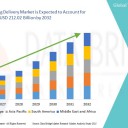
The topical drug delivery market has emerged as a vital segment of the global pharmaceutical and healthcare industry, driven by the growing demand for localized treatment, improved patient compliance, and reduced systemic side effects. Topical drug delivery involves the application of pharmaceutical formulations directly onto the skin or mucous membranes to treat localized conditions or enable transdermal absorption into systemic circulation. Over the years, advancements in formulation technologies, rising prevalence of skin disorders, and increasing preference for non-invasive therapies have significantly contributed to the market’s expansion.
Understanding Topical Drug Delivery
Topical drug delivery systems are designed to deliver active pharmaceutical ingredients (APIs) directly to the site of action. These systems include creams, ointments, gels, lotions, foams, sprays, and transdermal patches. Unlike oral or injectable drugs, topical formulations bypass the gastrointestinal tract and first-pass metabolism, which helps maintain drug efficacy while minimizing adverse effects.
Topical drug delivery is widely used in dermatology for treating conditions such as acne, eczema, psoriasis, fungal infections, and bacterial skin diseases. Beyond dermatology, these systems are also employed in pain management, wound care, ophthalmology, and hormone replacement therapies. The versatility and convenience of topical administration make it an attractive option for both patients and healthcare providers.
Key Market Drivers
One of the primary drivers of the topical drug delivery market is the rising prevalence of dermatological disorders worldwide. Factors such as pollution, changing lifestyles, aging populations, and increased exposure to allergens have led to a higher incidence of skin-related conditions. This has fueled demand for effective and easy-to-use topical treatments.
Another significant driver is the growing emphasis on patient-centric healthcare. Topical drug delivery systems are non-invasive, painless, and easy to administer, which enhances patient adherence, especially among pediatric and geriatric populations. The ability to self-administer medications without medical supervision further supports market growth.
Technological advancements in drug formulation and delivery systems have also played a crucial role. Innovations such as nanoparticles, liposomes, microemulsions, and hydrogels have improved drug penetration through the skin barrier, enhanced stability of active ingredients, and enabled controlled or sustained drug release. These advancements have expanded the therapeutic potential of topical drug delivery beyond traditional applications.
Market Segmentation
The topical drug delivery market can be segmented based on product type, formulation, therapeutic application, and end user. By product type, the market includes semi-solid formulations such as creams, ointments, and gels, as well as liquid and solid forms like sprays and transdermal patches. Semi-solid formulations dominate the market due to their widespread use in dermatology and ease of application.
In terms of therapeutic application, dermatology accounts for the largest share, followed by pain management, ophthalmology, and wound care. The increasing use of topical analgesics for musculoskeletal pain and arthritis has significantly contributed to growth in the pain management segment. Transdermal patches used for nicotine replacement therapy, hormonal treatments, and chronic pain management are also gaining traction.
End users of topical drug delivery systems include hospitals, clinics, home care settings, and specialty dermatology centers. The growing trend toward home-based care and self-medication has increased demand from home care settings, further boosting market expansion.
Role of Innovation and R&D
Research and development play a critical role in shaping the topical drug delivery market. Pharmaceutical companies are investing heavily in developing novel formulations that enhance skin permeability while maintaining safety and stability. Advanced carriers such as ethosomes, niosomes, and solid lipid nanoparticles are being explored to improve drug delivery efficiency.
Personalized medicine is another emerging trend influencing R&D activities. Tailoring topical formulations based on individual skin types, disease severity, and genetic factors is gaining attention, particularly in dermatology and cosmetic dermatology. This approach not only improves treatment outcomes but also strengthens patient satisfaction.
Regulatory Landscape and Challenges
Despite its growth potential, the topical drug delivery market faces several challenges. Regulatory approval processes for new topical formulations can be complex, as authorities require comprehensive data on safety, efficacy, and skin compatibility. Ensuring consistent drug absorption and bioavailability across different skin types also remains a technical challenge.
Additionally, the skin’s natural barrier function limits the penetration of certain drugs, especially large or hydrophilic molecules. Overcoming this barrier without causing irritation or long-term damage is a key focus area for researchers and manufacturers. Competition from alternative drug delivery routes and the availability of generic topical products may also impact market dynamics.
Regional Market Insights
North America holds a significant share of the topical drug delivery market, supported by advanced healthcare infrastructure, high awareness of skin health, and strong presence of pharmaceutical companies. The region also benefits from robust R&D activities and early adoption of innovative drug delivery technologies.
Europe follows closely, driven by increasing prevalence of chronic skin conditions and supportive regulatory frameworks for pharmaceutical innovation. Meanwhile, the Asia-Pacific region is expected to witness the fastest growth due to rising healthcare expenditure, expanding patient population, and growing awareness of dermatological treatments in emerging economies.
Latin America and the Middle East & Africa are gradually gaining momentum as access to healthcare improves and demand for affordable, easy-to-use topical therapies increases.
Future Outlook
The future of the topical drug delivery market looks promising, with continuous advancements in formulation science and material technology. The integration of nanotechnology, smart drug delivery systems, and biodegradable materials is expected to redefine how topical therapies are developed and administered. Growing interest in combination therapies and multifunctional formulations that offer therapeutic and cosmetic benefits is also likely to open new growth avenues.
As healthcare systems increasingly focus on preventive care and quality of life, topical drug delivery systems will continue to gain importance. Their ability to provide targeted, effective, and patient-friendly treatment positions them as a key component of modern pharmaceutical and healthcare strategies.
In conclusion, the topical drug delivery market is evolving rapidly, supported by technological innovation, rising demand for non-invasive therapies, and expanding therapeutic applications. With ongoing research and a strong focus on patient needs, this market is set to play a crucial role in the future of drug delivery and personalized healthcare.
Neuste Artikel
- AI Voice Commerce Market Demand, Trade Dynamics, and Forecast Trends (2026–2033) (
 kaumu11)
 - Heart Pump Device Market Analysis Report 2026–2033: Key Opportunities and Future Insights ( kaumu11)
- Radiation Effects Testing Market Evolution 2026–2033: Transforming Technology and User Experience ( kaumu11)
- Polypropylene(PP)(CAS 9003-07-0) Market Growth Trends and Emerging Opportunities (2026–2033) ( kaumu11)
- Heat pump Market Outlook 2026–2033: Business Strategies, Growth Drivers Forecasts ( kaumu11)
- Electric Submersible Pump & Artificial lift Systems Market Demand, Trade Dynamics, and Forecast Trends (2026–2033) ( kaumu11)
Die neuesten Forenbeiträge
- fxgfh (
 ENGLISH)
 - dsfdsf (
 yiluyilu)
 - https://leetcode.com/discuss/post/7992759/how-do-i-contact-edreams-uk-by-phone-com-chjw/ ( liroliro)
- https://leetcode.com/discuss/post/7992759/how-do-i-contact-edreams-uk-by-phone-com-chjw/ ( ENGLISH)
- https://leetcode.com/discuss/post/7992749/can-i-get-a-refund-for-edreams-prime-com-0078/ ( liroliro)
- https://leetcode.com/discuss/post/7992749/can-i-get-a-refund-for-edreams-prime-com-0078/ ( ENGLISH)
Werbung